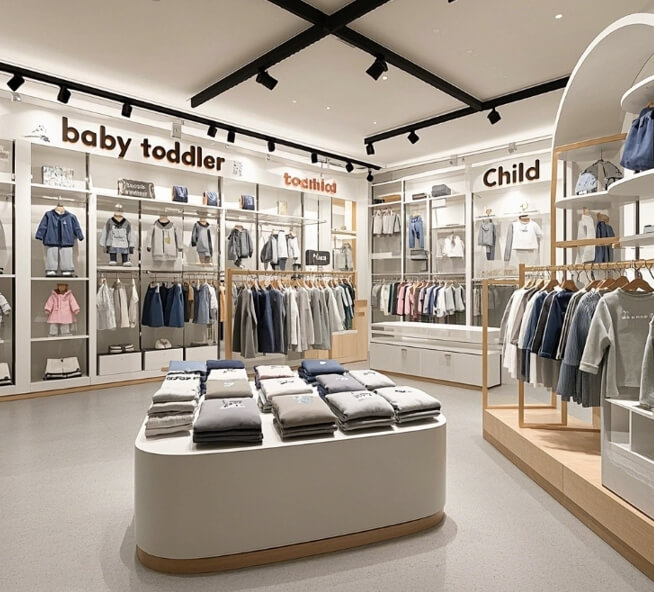
What Makes Children’s Clothing Store Design a Wonderland for Youngsters?
Imagine walking into a children’s clothing store where every corner tells a story—from a magical fairy – tale land to an exciting jungle adventure. This article unlocks the secrets of designing such captivating stores!

1.Thematic Scenario-based Layout.
Thematic scenario-based layouts create an enchanting and dreamy shopping atmosphere that captivates both children and their parents. By incorporating themes that resonate with children’s interests, such as fairy tales, popular animations, or nature-inspired settings, store designers can transform a simple shopping experience into an unforgettable journey.
For instance, dividing the store into distinct thematic zones allows children to explore different worlds while browsing through clothing options. A fitting room designed with the theme of Disney’s *Frozen* could feature icy blue lighting, snowflake-patterned walls, and frosted mirrors, creating the illusion of stepping into Queen Elsa’s magical ice palace. This not only enhances the fun factor for children but also encourages them to try on outfits multiple times, increasing dwell time within the store.
Another effective approach is setting up a display area inspired by a forest cottage. In this section, green leafy vines can be hung from the ceiling to mimic tree branches, while mushroom-shaped stools provide a whimsical seating option for kids and parents alike.
The flooring might incorporate natural textures like wood or stone patterns, further reinforcing the woodland ambiance. Such immersive experiences make shopping more enjoyable for children and leave a lasting impression, fostering brand loyalty and positive word-of-mouth among families.
Moreover, integrating interactive elements into these themed areas can elevate the overall experience. For example, a fairy tale-themed corner could include a storybook nook where children can sit and read while waiting for their turn to shop. Alternatively, an animation-inspired zone might feature character cutouts or photo booths, allowing children to take memorable pictures with their favorite cartoon figures.
By thoughtfully designing each section around specific themes, children’s clothing stores can create a magical shopping environment that meets kids’ fancy, boosts sales, and secures long – term customer relationships.

2.Skillful Use of Store Fixtures.
By incorporating elements that resonate with a child’s imagination and curiosity, store designers can create an engaging environment that transforms a simple shopping trip into an adventure.
Store Fixtures should be designed with childlike charm to captivate young visitors. For instance, fixtures shaped like cartoon animals or inspired by building blocks can evoke a sense of playfulness and familiarity. These designs serve as more than just functional storage; they become part of the storytelling within the store, drawing children into a world where shopping feels like playtime.
Additionally, using store fixtures of varying heights allows for strategic organization of clothing styles. This approach guides children’s eyes naturally from one section to another, creating a seamless flow throughout the store.
To further engage young shoppers, seasonal new arrivals or key products should be placed at heights easily accessible to children. This placement stimulates curiosity and invites them to touch and explore the items themselves. When children feel empowered to interact directly with the merchandise, they are more likely to develop a genuine interest in the products.
Interactive elements near the store fixtures can significantly enhance the shopping experience. Small devices such as rotating ornaments, colorful lights, or even mini games can attract children’s attention and encourage active exploration. These interactive features not only entertain but also increase the likelihood of children spending more time in the store, which benefits both their enjoyment and the retailer’s sales potential.
Moreover, thoughtful consideration of color schemes, lighting, and spatial arrangement complements the use of themed store fixtures. Bright, cheerful colors paired with soft, warm lighting create an inviting atmosphere, while a well – planned layout ensures easy navigation.
In conclusion, through the artful design of store fixtures, children’s clothing stores can not only effectively showcase their products but also create an immersive, enjoyable shopping experience that keeps families coming back.

3.Incorporating Interactive Experience Elements.
Incorporating interactive experience elements not only strengthens the emotional connection between customers and the brand but also creates a memorable shopping environment that appeals to both children and their parents. By integrating engaging activities and thoughtful design features, these stores can transform a simple shopping trip into an enjoyable family experience.
One effective way to enhance interactivity is by setting up a dedicated children’s play area within the store. This space should be equipped with safe, age-appropriate toys and game facilities that cater to various interests and developmental stages. For instance, soft building blocks for younger children and puzzles or board games for older ones can keep kids entertained while their parents browse through the clothing selections.
The presence of such a play area not only provides a convenient solution for parents during long shopping sessions but also fosters a positive association with the store in the minds of young visitors.
Another valuable approach is organizing parent-child handicraft activities, which serve as excellent opportunities for families to bond while learning about clothing culture. Activities like T-shirt graffiti, where children can decorate plain shirts with colorful designs, or button painting, allowing them to personalize buttons with their own artistic touches, encourage creativity and collaboration.
These hands-on experiences enable children to better understand the process behind designing and customizing clothes, sparking their interest in fashion from an early age. Moreover, parents appreciate the educational aspect of these events, making them more likely to return to the store for future visits.
To further engage customers and promote the store, creating photo check – in points throughout the space is highly recommended. These designated areas should feature unique and eye – catching decorations, such as oversized cartoon cutouts, themed backdrops inspired by popular children’s stories, or colorful neon signs.
Encouraging families to take pictures at these locations not only adds an element of fun to the shopping experience but also serves as free advertising for the store. As parents share these photos on social media platforms, they effectively promote the store to their friends and followers, increasing brand visibility and attracting new customers.
By integrating these interactive elements, children’s clothing stores can establish a strong emotional connection with their customers, making each visit a memorable and fulfilling experience for the entire family. This, in turn, drives customer loyalty, boosts sales, and contributes to the long – term success of the business.
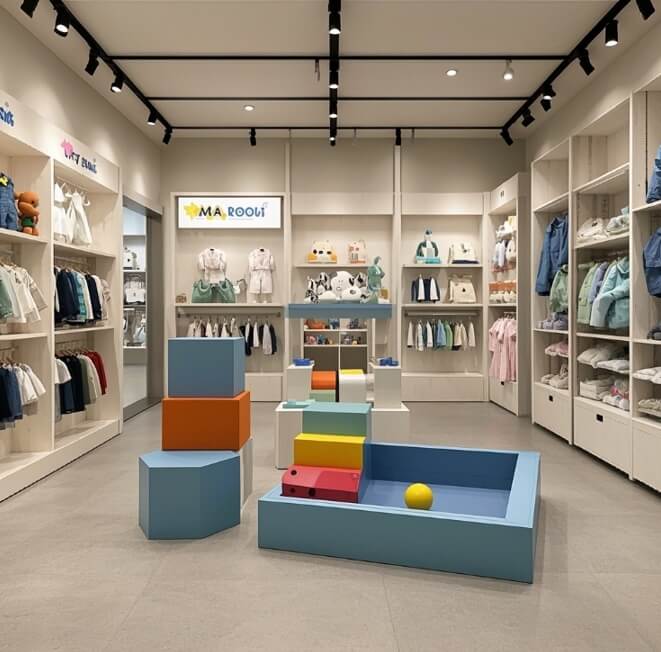
4.Paying Attention to the Color and Lighting Collocation.
When designing a children’s clothing store, paying close attention to color and lighting combinations is crucial. These elements play a significant role in creating an inviting, comfortable, and enjoyable shopping environment for both children and their parents. A well-thought-out design can enhance the overall experience and leave a lasting impression on customers.
Firstly, it is essential to use bright and lively colors as the main tone in the store. Colors such as pink, blue, and yellow are particularly effective because they appeal to children while maintaining a cheerful and playful atmosphere. Pink, for instance, evokes feelings of warmth and tenderness, making it ideal for younger children’s sections. Blue represents calmness and trust, which can be used in areas where parents might spend more time browsing.
Yellow adds a sense of energy and optimism, perfect for drawing attention to promotional displays or seasonal collections.In addition to color selection, lighting plays an equally important role in setting the mood within the store. Soft lighting should be employed throughout the space to ensure that the environment remains gentle on the eyes without overwhelming visitors.
Different areas of the store can benefit from varying tones of lighting to suit specific purposes. For example, in the baby clothing section, warm yellow lighting can create a cozy and nurturing atmosphere, making parents feel at ease while selecting garments for their infants. On the other hand, the children’s sportswear area can feature bright white lighting to emphasize vitality and movement, aligning with the active nature of sports attire.
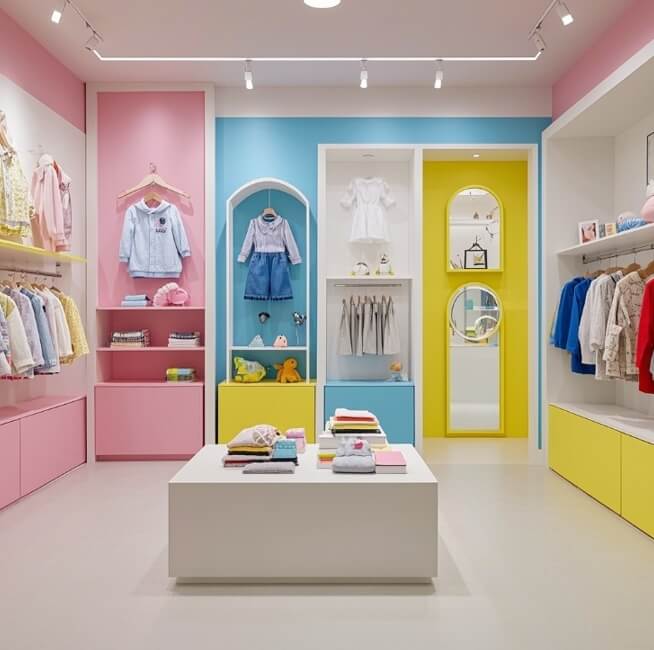
5.Optimizing Product Display and Information Signage.
A well-organized store layout not only attracts customers but also ensures they can navigate through the store effortlessly, ultimately leading to increased satisfaction and sales.
Firstly, categorizing children’s clothing according to age, gender, and style is an effective way to simplify the shopping process. For instance, dividing the store into sections such as “Infants (0-2 years),” “Toddlers (3-5 years),” and “Kids (6-12 years)” allows parents to immediately focus on the appropriate age group. Similarly, separating clothing by gender or style—such as casual wear, formal wear, or seasonal collections—further streamlines the selection process.
This classification helps parents quickly locate the products they need without feeling overwhelmed by too many choices.Clear and detailed information signage plays a vital role in enhancing customer convenience. Placing labels next to each product that include essential details such as size, material composition, care instructions, and washing methods ensures transparency and builds trust with customers.
For example, if a parent sees that a garment is made from 100% organic cotton and requires hand-washing, they can make an informed decision based on their preferences and lifestyle. Additionally, incorporating QR codes on signage that link to further product details or customer reviews can provide even more value to tech-savvy shoppers.
Strategic placement of signboards throughout the store aids in guiding customer flow and preventing congestion in high-traffic areas. Signboards located at aisle entrances or corners can direct parents toward specific sections, such as “New Arrivals” or “Sale Items.” This not only improves navigation but also encourages exploration of different parts of the store.