How to Open a profitable Cosmetics Store?
Opening a successful cosmetics store needs more than great products—it requires planning for layout, displays, decor, lighting, and service. Below is a streamlined guide for new and established brands.
1.Strategic Store Layout: Customer Experience First
A good layout guides shoppers and highlights products, balancing aesthetics and functionality.
Demographic-based product zones: Split into skincare (all ages), makeup (by category/occasion), and personal care (haircare, fragrances). Organize by brand, price, or skin type to speed up shopping and encourage impulse buys.
Comfortable rest area: Place away from busy zones but accessible, with seating, magazines, and phone chargers to keep customers longer.
Testing area: Well-lit (natural light mimicry) with clean mirrors, disposable applicators, and wipes. Train staff to assist with application tips—builds trust in products.
Practical storage: Back-of-store or separate room with sturdy shelving, labeled bins, and inventory tracking software. Keep clean/dry to protect cosmetics from damage.
2.Effective Display Racks: Boost Brand & Visibility
The right racks showcase products and reinforce your brand identity.
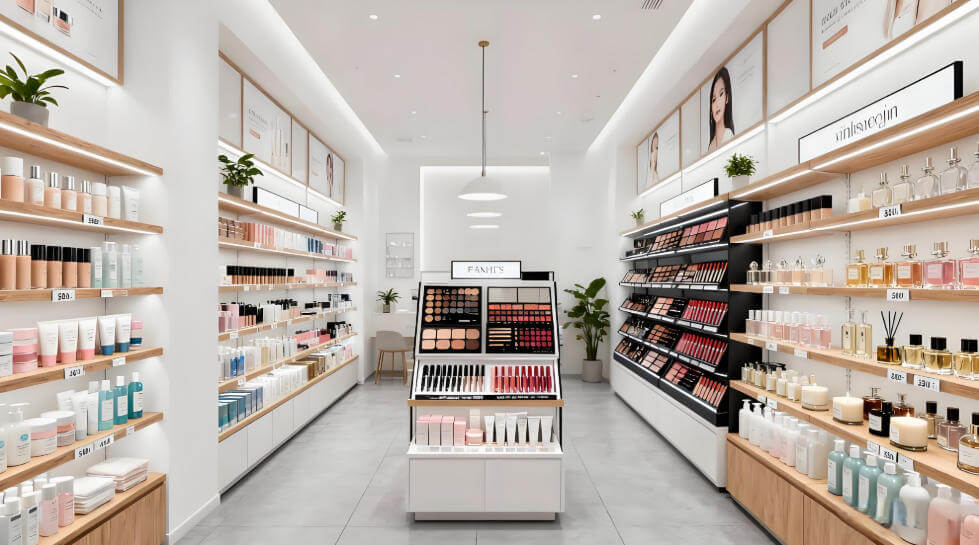
Wall-mounted racks: Ideal for small/medium stores—prioritize adjustable shelves for varied product sizes. Keep shelves ≤350mm wide for small items (lipsticks, mascaras) to avoid hiding products; wider shelves or extra racks for larger items (skincare sets).
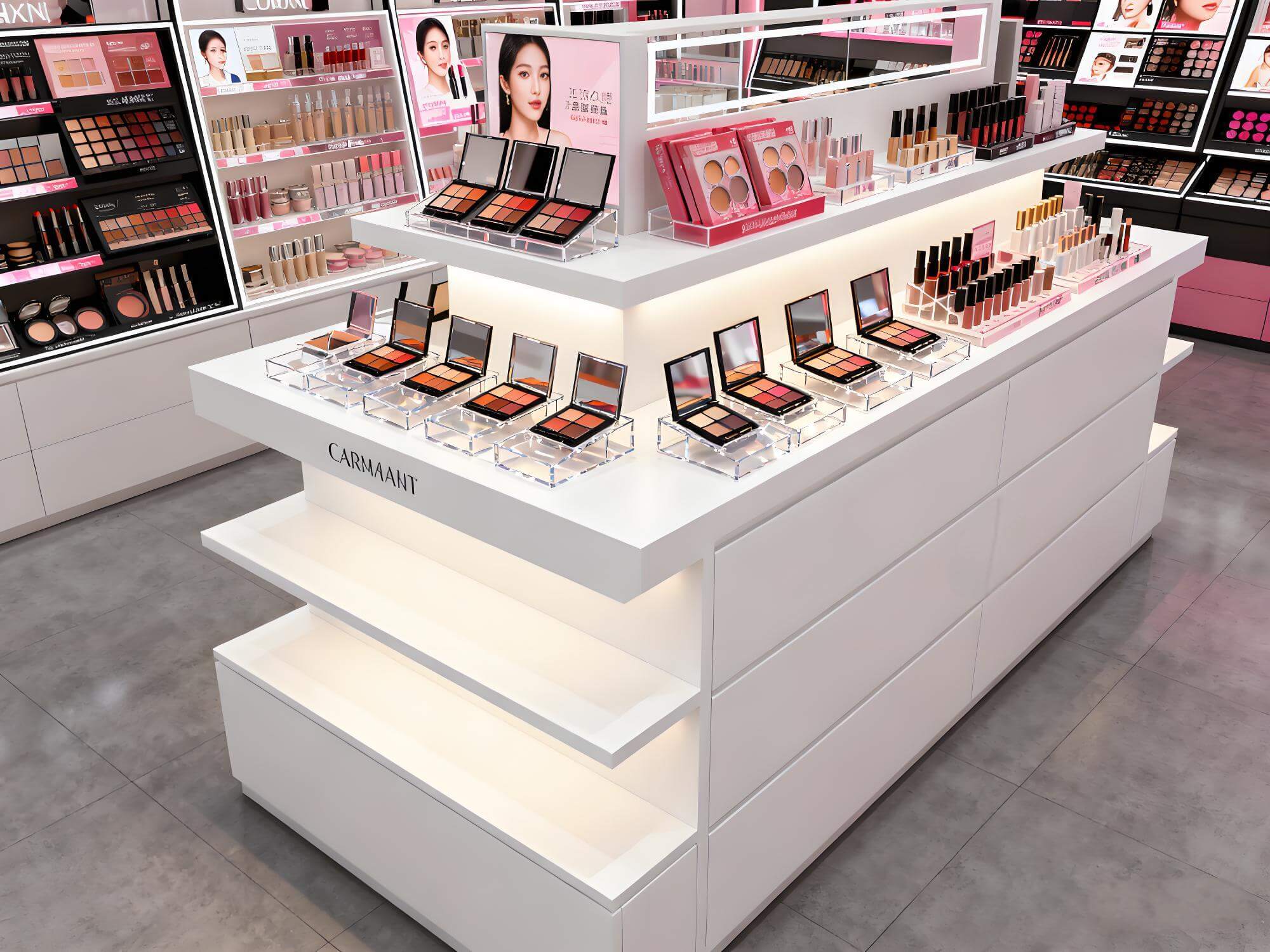
Island racks: Center-store focal points for bestsellers/new arrivals. Use MDF with painted finishes (matte white for modern, gold for luxury). Display at eye level (1.2m–1.6m) and add acrylic trays to organize small products (eyeshadow palettes)—enhances perceived value.
Light boxes & mirrors: Use well-placed light boxes (model imagery) near entrances/islands to highlight key products. Install clean, anti-fog mirrors in testing areas, makeup zones, and near checkout for touch-ups. Full-length mirrors work for accessory sections.
3.Decor Style: Match Your Audience
Decor reflects brand values and appeals to target shoppers.
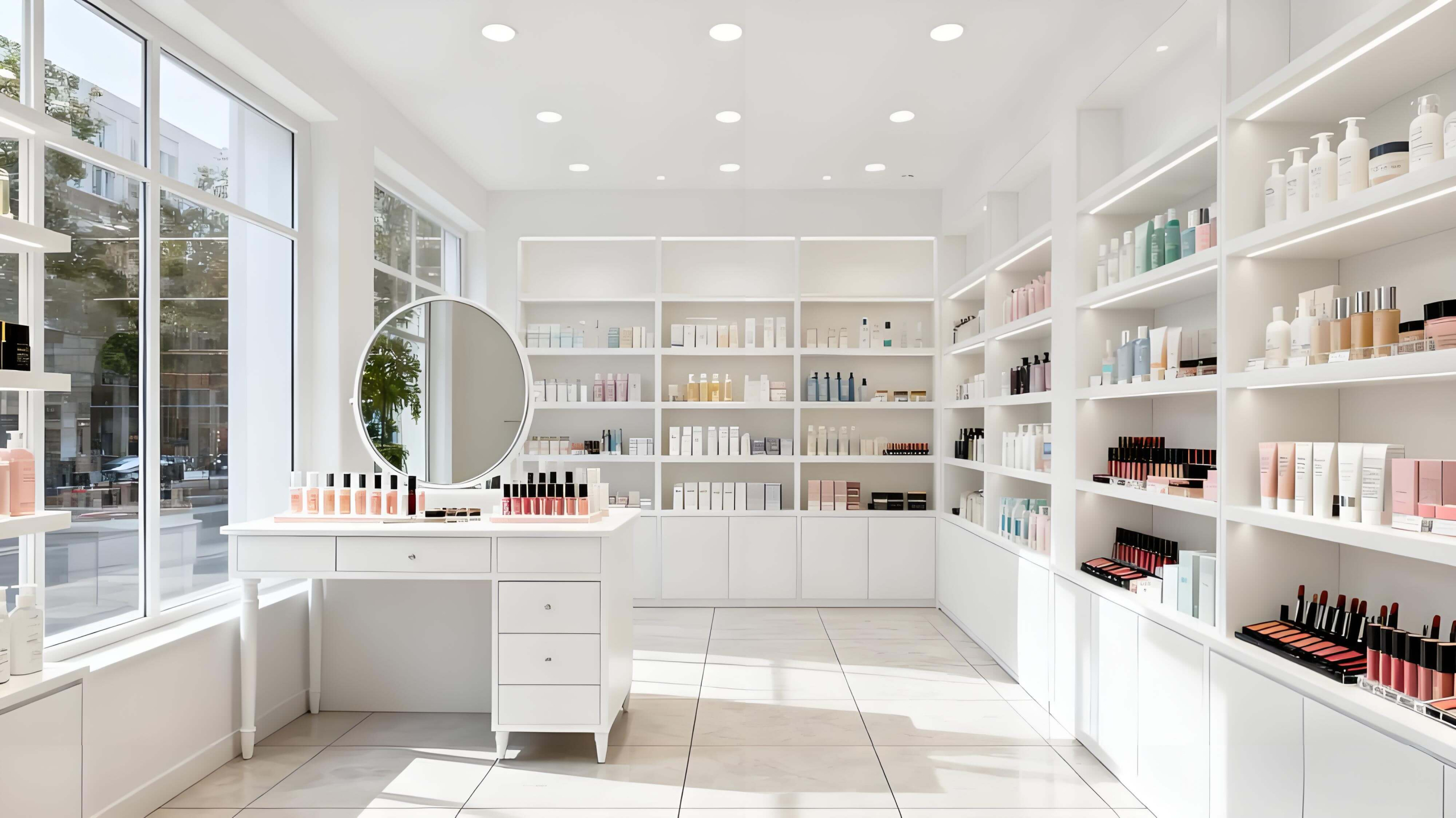
For budget/mass markets: Nordic style—bright, simple, functional. White/light gray ceilings (recessed/pendant lights), affordable durable tiles (light colors, easy to clean). Add small plants or beauty-themed art for warmth.
For luxury shoppers: Dark palettes (black, navy) with marble/polished hardwood floors. Metallic accents (gold, brass) on racks/lighting. Use velvet sofas and glass cases for limited editions. Add subtle scents or soft music for a premium feel—avoid clutter.
4.Lighting Design: Highlight & Protect
Lighting affects product perception and inventory safety.
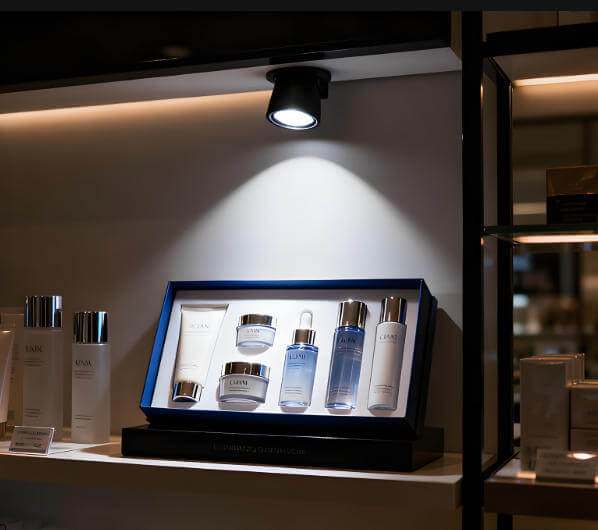
Spotlights: Focus on new/bestselling products. Use 4000K–5000K (natural light mimicry) to avoid color distortion; skip warm tones (2700K–3000K) for makeup.
LED strip lights: Install discreetly under shelves for even illumination of wall/island racks—highlights product texture/color without glare.
Window displays: Use spotlights/LED floodlights to stand out at night. Keep displays simple (e.g., holiday-themed with warm white lights) to avoid overwhelming passersby.
Heat control: Choose low-heat LEDs; avoid incandescent bulbs near heat-sensitive products (lipsticks, creams). Maintain 20°C–25°C with AC/ventilation.
5.Professional Service Team: Loyalty Driver
Great service is key—staff are your brand face.
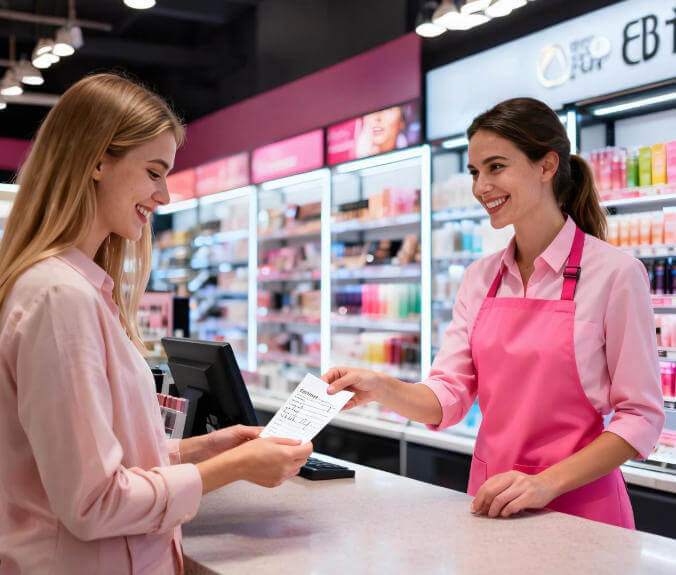
Friendly service: Train staff to greet with a smile, offer help (without pushiness), and use small gestures (remembering names) to build rapport.
Product knowledge: Provide comprehensive training (ingredients, benefits, application, allergens). Update staff on new products/trends (clean beauty) via brand workshops.
Empower staff: Let them guide shoppers (e.g., wedding lipstick recommendations) and resolve issues independently (refunds/exchanges) to speed up satisfaction.