
5 Key Tips for Opening a Successful Cake Shop
Starting a cake shop is exciting but challenging—success depends on smart design and customer-centric details. Below are 5 key points to boost visibility, enhance experience, and drive sales.
1.Storefront Logo & Window Design
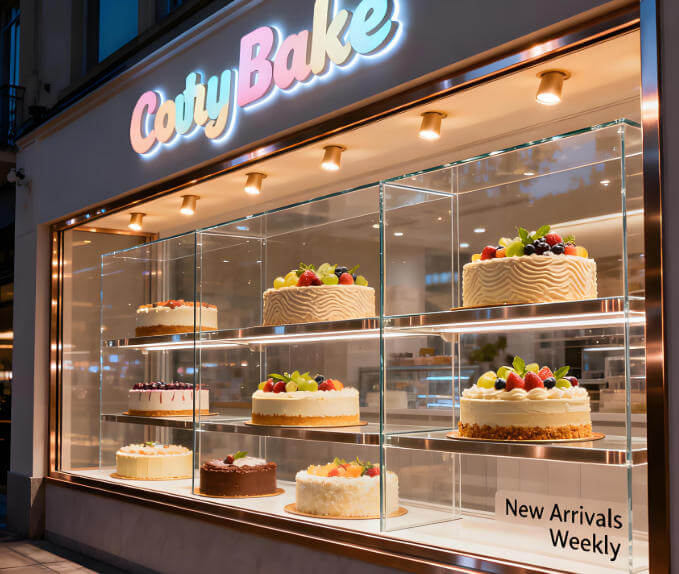
The storefront is your cake shop’s first impression, so the logo and window must stand out to capture foot traffic. First, the logo should be highly recognizable: choose bold, on-trend colors (such as soft pastels for a cozy vibe or vibrant hues for a modern feel) and clear, readable fonts (avoid overly decorative styles that are hard to distinguish from a distance).
Equally important, add a backlighting system—LED strip lights work well here, as they’re energy-efficient and provide consistent brightness. This ensures the logo remains visible even after sunset, drawing in night-time customers who might be craving a sweet treat.
For the window, opt for large, three-dimensional transparent glass (at least 1.5 meters wide and 2 meters tall) to maximize visibility. Inside the window, arrange your most eye-catching cakes—think layered birthday cakes with intricate frosting, colorful macaron towers, or seasonal specials like pumpkin spice cakes in autumn.
Add subtle lighting inside the window (warm white spotlights, 2700K-3000K) to highlight the cakes’ textures, making the frosting look smooth and the fruits on top fresh. You can also rotate the display weekly to showcase new products, keeping the window dynamic and encouraging passers-by to stop and peek in regularly.
2.Store Floor Plan Layout
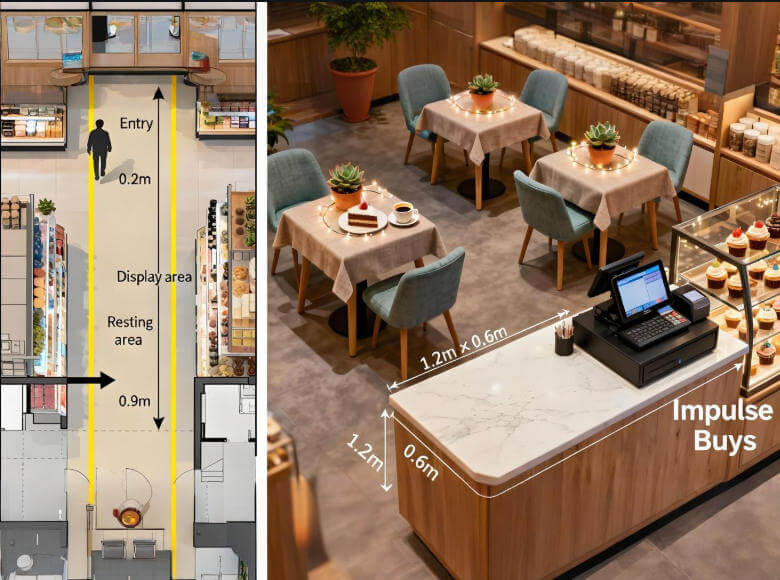
A well-designed floor plan not only improves customer flow but also boosts operational efficiency. First, reserve ample aisle space: main aisles should be at least 1.2 meters wide, and secondary aisles (near display racks) should be no less than 0.9 meters. This prevents overcrowding, especially during peak hours (like weekends or after work), and lets customers move freely to browse different cake options.
Next, set up a dedicated seating area—this small addition can turn one-time buyers into repeat customers. The seating area doesn’t need to be large; 4-6 small tables (each fitting 2 people) with comfortable chairs (preferably padded ones for extra coziness) work well. Add small decor touches, like potted succulents or fairy lights, to create a relaxed atmosphere where customers can sit, enjoy their cake with a cup of coffee, and share photos on social media (free marketing for your shop!).
Finally, the cash register area should be both functional and efficient. Choose a counter that’s 1.2 meters long and 0.6 meters deep—this gives enough space for a POS system, a cash drawer, and a small display of impulse buys (like individual chocolate truffles or mini cupcakes). Position the cash register near the exit but not blocking the aisle, so customers can check out quickly without holding up the flow.
3.Display Rack Design & Functional Adaptation
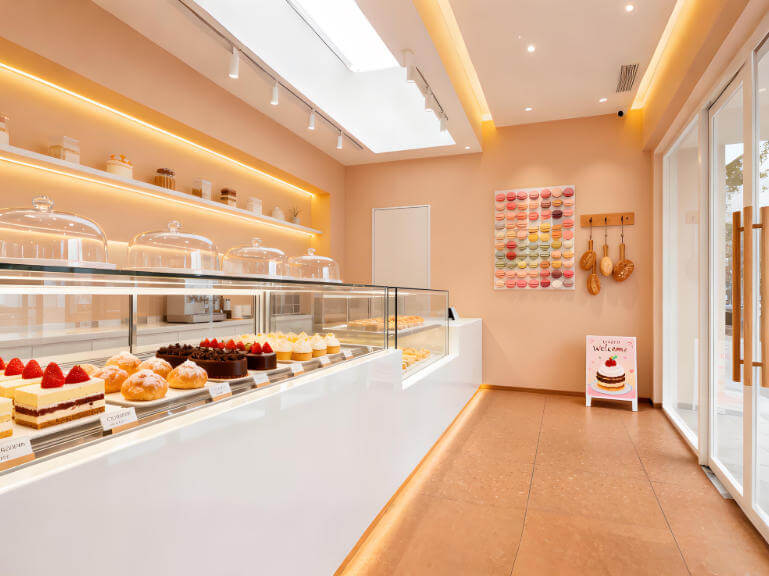
Display racks are where your cakes shine, so they need to balance aesthetics, practicality, and food safety. For both wall-mounted and central island racks, glass is the best material—tempered glass is ideal, as it’s durable and easy to clean. The glass should be at least 8mm thick to support the weight of cakes (which can be heavy, especially layered ones).
For central island racks, use sliding glass doors instead of hinged ones—sliding doors save space and let customers open the rack with one hand, making it easier to pick up a cake. Inside the rack, add adjustable shelves (spaced 30-40cm apart) to fit different cake sizes, from small 6-inch cakes to large 10-inch celebration cakes. Also, install a small ventilation system to keep the inside of the rack cool, preventing cake frosting from melting in warm weather.
For pre-packaged products (like boxed cookies, wrapped brownies, or take-home cake slices), a fully open central island is better. Use a wooden or marble countertop (both easy to clean and visually appealing) and arrange the packages in neat rows, with clear price tags and product descriptions (e.g., “Dark Chocolate Brownie – Gluten-Free”). Add small signs above the island highlighting best-sellers, like “Customer Favorite: Salted Caramel Cake Slice,” to guide customers’ choices.

4Lighting Configuration & Decoration Style Positioning
Lighting can make or break how your cakes look—poor lighting can make even the most delicious cake appear dull, while good lighting highlights its colors and textures. First, focus on product lighting: use warm white spotlights (2700K-3000K) with a narrow beam angle (30 degrees) to target individual cake displays.
Install the spotlights 1.5 meters above the display racks, and space them 0.8-1 meter apart to ensure every cake is evenly lit. Avoid cool white lights (above 4000K) as they can make cakes look dry, and never use halogen lights—they produce too much heat, which can melt frosting or dry out bread.
In addition to product lighting, add ambient lighting to set the mood. Soft ceiling lights (like recessed LED panels) provide overall brightness, while string lights or wall sconces add a cozy touch. Make sure the lighting is never too bright or glare—use frosted bulbs or diffusers to soften the light, so customers feel comfortable browsing.
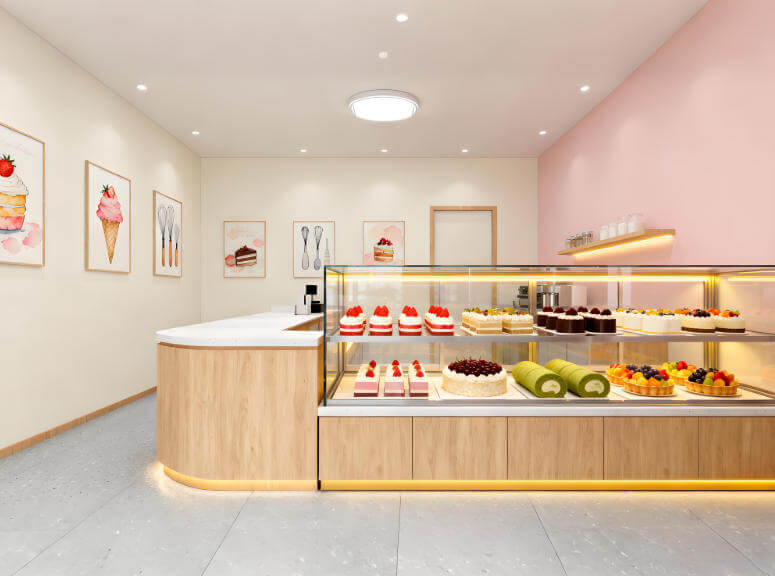
When it comes to decoration style, align it with your target customers. If you’re targeting mid-to-high-end clients (e.g., customers looking for custom wedding cakes or luxury desserts), use high-quality materials: artificial stone floors (durable and easy to maintain), marble countertops, and velvet curtains for the seating area.
For a budget-friendly, casual cake shop aimed at families or students, opt for ordinary ceramic tiles (cheaper than stone but still easy to clean), wooden shelves, and colorful wall decals (e.g., hand-drawn cake illustrations) to keep the space lively.
5.Advertising & Traffic Attraction Design
Effective in-store advertising can turn window shoppers into paying customers and encourage repeat visits. First, use large cake posters—print high-resolution images (at least 300 DPI) of your most popular products, like a triple-chocolate cake with ganache drizzle or a fruit-topped vanilla cake.
Hang the posters on walls near the entrance or seating area, making sure they’re at eye level (around 1.6 meters high) for easy viewing. Add short, enticing captions, such as “Indulge in Our Homemade Triple-Chocolate Cake – Made Fresh Daily!” to highlight key selling points.
Second, install LED display screens—19-inch or 24-inch screens work well for small to medium-sized shops. Mount them near the cash register or entrance, and cycle through dynamic content: short videos of bakers decorating cakes (to showcase craftsmanship), photos of customer testimonials (e.g., “Loved the wedding cake! – Sarah M.”), and details of ongoing promotions (e.g., “10% Off All Cakes This Weekend”). Update the content weekly to keep it fresh—for example, during holidays, add videos of seasonal cakes like Christmas log cakes or Valentine’s Day heart-shaped cakes.
You can also add small, eye-catching signs near display racks: use chalkboards or acrylic signs to highlight limited-time offers (“New Matcha Cake – Only This Month!”) or dietary options (“Gluten-Free and Vegan Cakes Available Here”). These small touches help customers find what they’re looking for quickly and encourage them to try new products.
By focusing on these 5 key points—storefront appeal, layout efficiency, display functionality, lighting, and advertising—you’ll create a cake shop that not only looks great but also meets customers’ needs, driving long-term success.