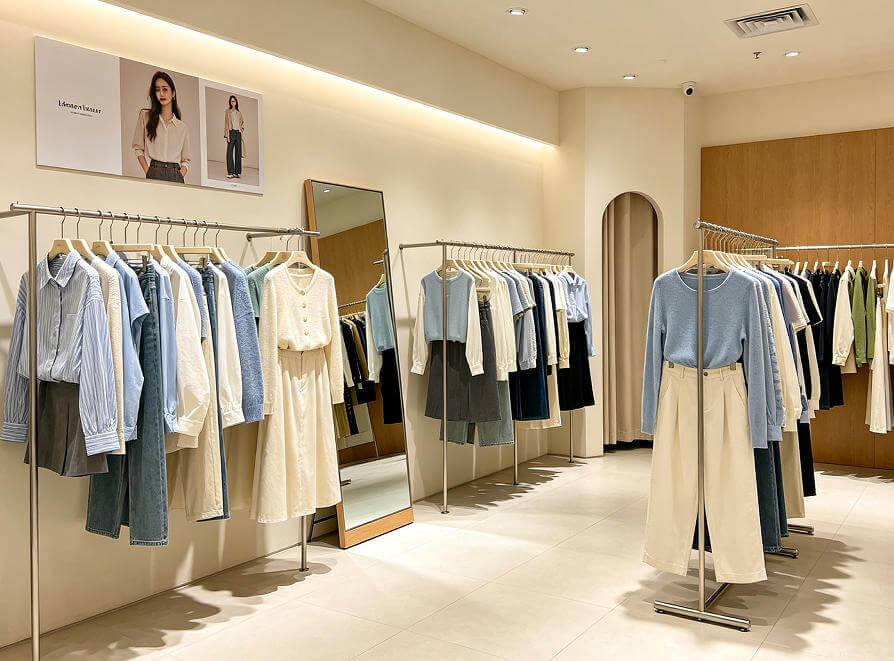
Breaking the Mold in Fashion Retail: 4 Core Strategies to Design a Profitable Clothing Store
Introduction: Why Mediocre Design Is a Silent Business Killer
Walk down any high street today. You will see dozens of clothing stores, but only a handful attract a steady stream of customers. The difference is rarely the product alone. It is the design.
The era of cluttered, warehouse-style retail—where garments are stacked on basic four-way racks without thought—has ended. Today’s consumers, especially Gen Z and millennials, expect more. They crave aesthetic appeal, seamless experience, and emotional connection. In short: a store must be Instagrammable, shoppable, and memorable.
For clothing store owners, the formula is simple: Visual appeal + Customer experience + Conversion-driven layout = Profitable retail.
For our company—specializing in the R&D, design, and production of display racks, stands, and shop fittings—these four pillars are not just theories. They are engineering realities. Below, we break down the four core dimensions that turn an ordinary apparel shop into a high-performance, money-making magnet.
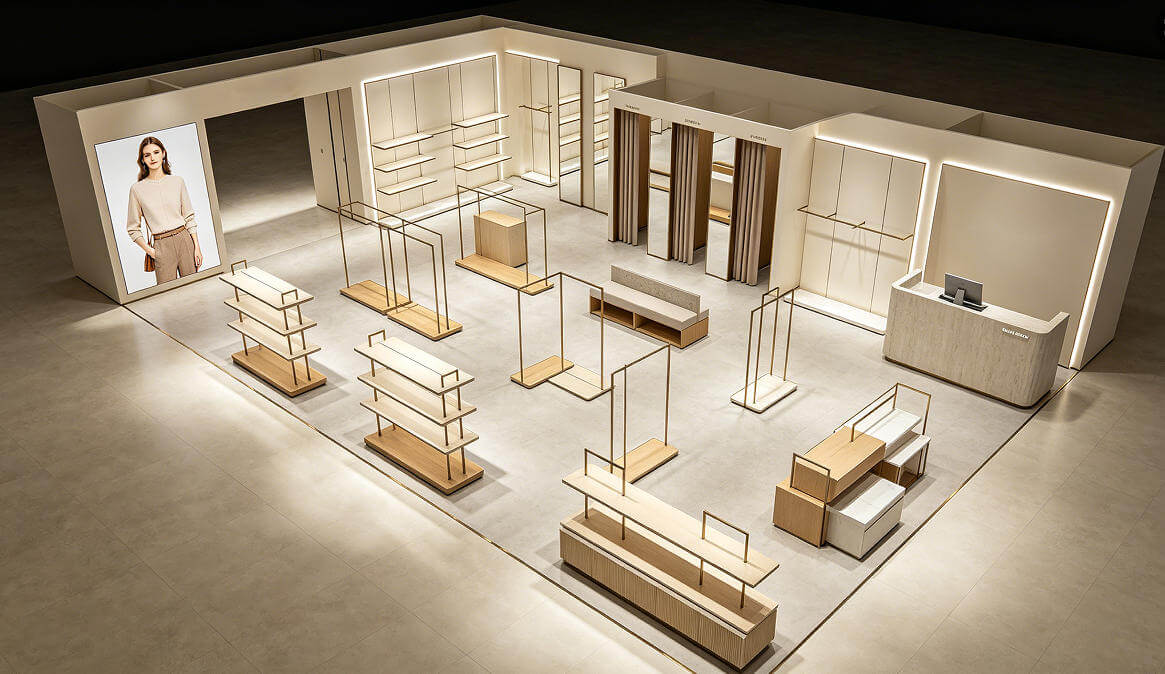
1.Spatial Aesthetics: Crafting a Premium Atmosphere
Before a customer touches a single fabric, the room speaks. The overall spatial aesthetic determines whether they walk in or walk past.
Clear Style Positioning: Less is More
Successful clothing stores choose a distinct visual identity and stick to it. Two dominant styles currently drive high conversion rates:
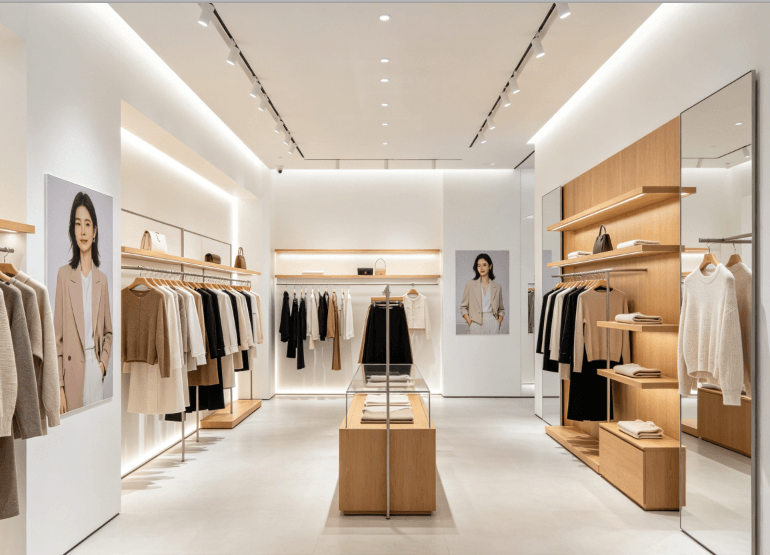
- Light Luxury Minimalism: Neutral tones (beige, cream, taupe), clean lines, and a sense of restrained elegance. Ideal for mid-to-high-end womenswear.
- Korean-style Minimalism: Bright white bases, soft pastel accents, and an airy, feminine feel. Perfect for fast-fashion or boutique casual wear.
The key is unified visual tone. Your display stands, garment racks, shelving, and furniture must speak the same design language. A chrome industrial rack next to rustic reclaimed wood may feel eclectic, but often reads as inconsistent.
Smart Spatial Layout: Flow Without Pressure
Poor layout kills sales. If customers feel blocked, confused, or cramped, they leave. The solution is intuitive zoning based on customer journey:
- Entrance (Power Wall): Highest visibility. Display hero products or full-price new arrivals.
- Browse Zone (Mid-floor): Low, open display stands for casual browsing. Avoid tall fixtures in the center—they create visual walls.
- Fitting Room Approach: Place accessories or promotional items here to capture last-minute impulse buys.
- Checkout Area: Clear, uncluttered, and positioned near the exit but not blocking the flow.
Pro tip for retailers: Use modular display racks. They allow you to reconfigure your floor plan weekly, keeping regular customers curious.
Material Mix: Elevating Tactile Quality
Nothing signals “cheap” faster than raw particle board or flimsy wire racks. To build premium perception, layer three material families:
- Wood (warmth): Ideal for base shelving, accent tables, and flooring. Oak, walnut, or matte laminates.
- Metal (strength): Powder-coated steel or brushed brass for garment racks and hanging rods. Our company’s racks use 2mm+ steel gauge for stability and longevity.
- Glass & Acrylic (modernity): Use sparingly for display cubes or accessory stands. Adds sparkle without clutter.
The right material combination not only looks expensive but also functions better—smooth-rolling casters, no wobbling arms, and rust-proof finishes.
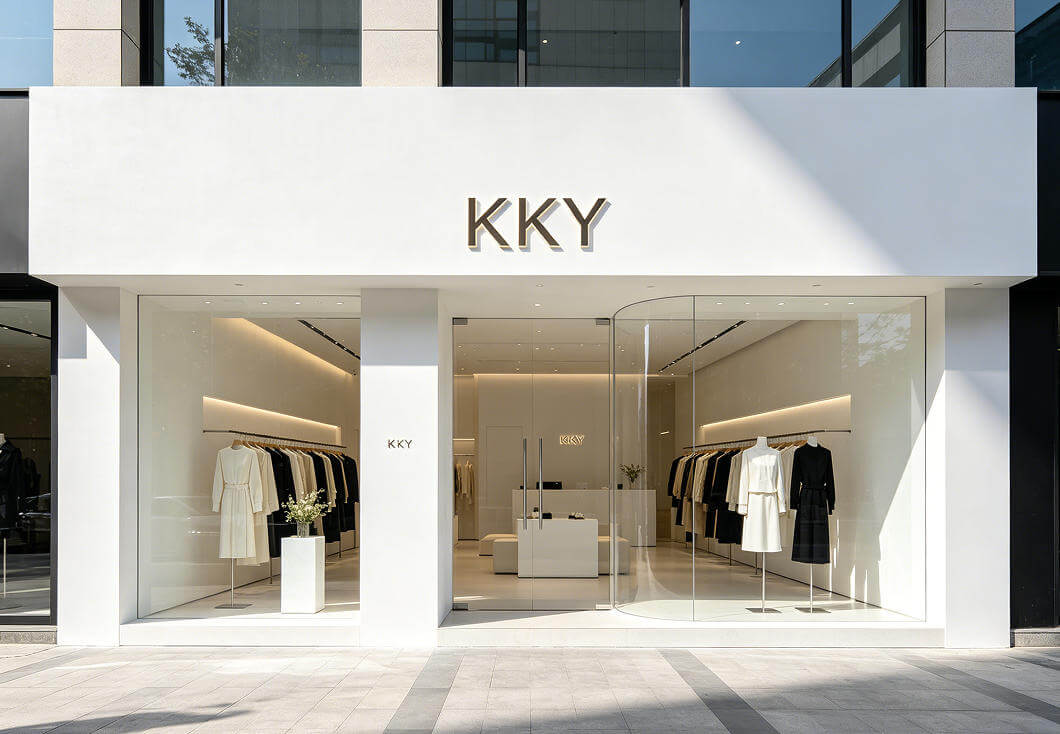
2.Visual Merchandising Logic: Driving Sales Through Scene-based Displays
Great ambiance is wasted if the products themselves are a mess. Logical, psychology-driven display systems directly lift average transaction value (ATV) and units per transaction (UPT).
Outfit Coordination Display: Reduce Decision Fatigue
Most customers struggle to visualize how a single blouse works with trousers or a skirt. Solve this for them.
Group full outfits on mannequins or on a dedicated feature display stand. For example:
- Blazer + silk cami + tailored trousers + heels.
- Denim jacket + graphic tee + cargo pants + sneakers.
When a shopper likes the whole look, they buy 3–4 items instead of one. Our adjustable grid panels and slotted rail systems make it easy to reconfigure these coordinated sets hourly.
Color Zone Merchandising: Visual Comfort Drives Selection
Nothing repels like a rainbow explosion. Organize your racks by color gradient:
- Light to dark (white → pastel → saturated → black)
- Monochromatic sections (all beige tones together, all blue tones together)
This creates a calm, library-like browsing experience. Customers’ eyes move smoothly without being overwhelmed. For your display racks, use end caps to mark color transitions—this subtle cue improves dwell time by 20–30%.
Focus Displays (The Hero Fixture): Forcing Attention
Every store needs a visual anchor. This is the first thing people see and the last thing they remember. Use a dedicated focal point for:
- New arrivals
- High-margin items
- Seasonal promotions
The focal display should be elevated (taller rack or podium), better lit (spotlight), and minimally stocked (fewer items = higher perceived value). Our custom raised display platforms and adjustable mannequin stands are engineered specifically for this role.
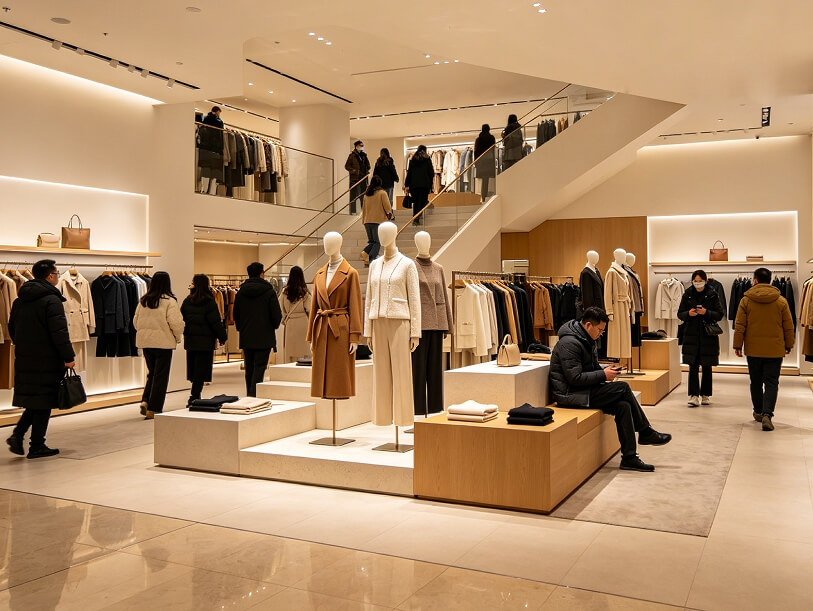
3.Detail Highlights: Low-Cost, High-Impact Memory Points
You do not need a renovation budget to be unforgettable. Small, smart details create the “Instagram moments” that bring customers back—and bring their friends.
Lighting Design: The Silent Salesperson
Poor lighting flattens colors and cheapens fabrics. Correct lighting does the opposite.
- Warm white (2700–3000K) for fitting rooms and wood-heavy zones → flattering to skin tones.
- Cool white (4000–5000K spotlights) for denim, white shirts, and accessories → sharp contrast and clarity.
- Track lighting with adjustable heads to refocus on weekly hero products.
Never rely on ceiling tubes alone. Use rail-mounted spotlights aimed at 45° onto garment displays. Our slotted display standards allow you to clip lights directly onto rack systems—no electrician required for small changes.
Photogenic Corners: Built-in Social Proof
Design at least two “photo-worthy” zones:
- The Fitting Room Mirror Wall: Backlit LED mirror + a small stool + a branded neon sign.
- The Window Display backdrop: Change it monthly with seasonal props (dried flowers in autumn, bright umbrellas in spring).
When shoppers take photos and tag your store, you earn free, high-trust marketing. We produce freestanding acrylic sign holders and metal grid walls that act as perfect photo backdrops while holding accessories.
Soft Decoration: Texture Brings Emotion
Even the best display racks need softening. Add:
- Framed art prints (abstract or fashion illustration)
- A low-pile rug in the fitting room area
- Fresh or high-quality faux greenery (olive branches, eucalyptus)
These details cost little but signal “curated” rather than “commodity.”
4.Operational Value: How Design Directly Boosts Your Bottom Line
Design is not an expense. It is an operating asset. When executed correctly, the four dimensions above generate measurable business results.
Higher Foot Traffic & Longer Dwell Time
An inviting storefront with clear zoning and comfortable lighting stops passersby. Once inside, a logical layout with varied display heights (low tables, mid-height racks, tall wall fixtures) creates visual intrigue, encouraging people to walk deeper into the store. Our modular gridwall panels and slatwall gondolas are proven to increase browsing time by 15–25 minutes.
Stronger Brand Recognition & Repeat Purchases
When your store has a consistent aesthetic—matching display rack finishes, signature color accents, unique focal points—customers remember you. They differentiate you from the generic store two doors down. Repeat visits rise because the experience is part of the product.
Social Media Amplification (Free Traffic)
Every photogenic corner, every beautifully styled mannequin, every well-lit garment rack is a content generation machine. Customers become your influencers. One viral fitting-room mirror selfie can reach 10,000 local viewers at zero cost.
Design your store to be shared. That means sturdy, elegant display stands that don’t wobble in photos, and clean backgrounds that don’t distract from the outfit.
Conclusion: Start With Looks, Succeed With Experience, Scale With Smart Design
A great clothing store does not happen by accident. It begins with visual magnetism that stops the scroll—and the foot traffic. It continues with a browsing experience so comfortable that customers want to stay. And it converts through intelligent display engineering that guides eyes, hands, and wallets.
The four dimensions—spatial aesthetics, logical merchandising, detail-driven memory points, and operational value—are not optional extras. They are the new baseline for profitable apparel retail.
For our company, which lives and breathes the design, R&D, and production of professional display stands, garment racks, and shop fittings, we know one truth above all: Small stores with big design thinking beat large stores with lazy layouts every single time.
Whether you are launching a boutique or retrofitting an existing space, start with your display infrastructure. The right racks, stands, and fixtures do not just hold clothes—they sell them.
Ready to turn your clothing store into a high-performance asset?
Explore our collection of modular, customizable, and durable display solutions designed for modern fashion retail.