
How to Make Your Jewelry Store Look More Luxurious and Memorable?
In today’s jewelry market, which is as vast as the starry sea, how can your jewelry store transform from a “passing cloud” into a “white moonlight” in customers’ hearts? The answer lies in a holistic “store rejuvenation” strategy across five key dimensions—each designed to create an unforgettable brand experience. Let’s explore how these elements work in tandem to elevate your store from ordinary to iconic.

1.Create a Unique Store Exterior: The First Impression that Lasts
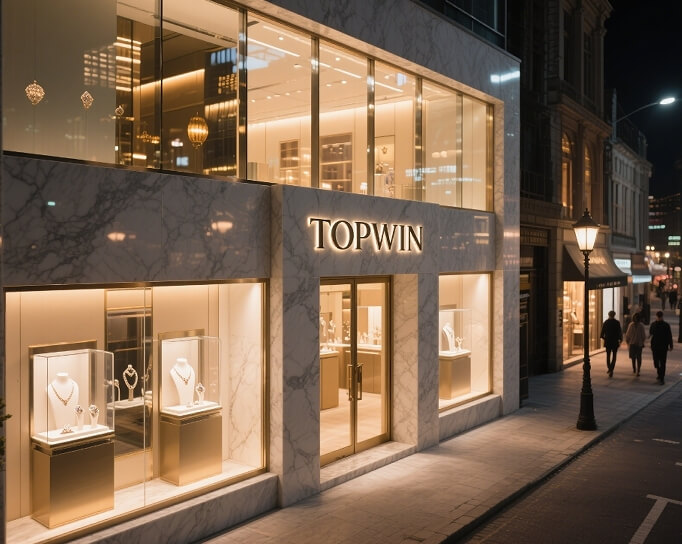
The store exterior serves as the initial and crucial impression that customers form of a jewelry store. It acts as a silent ambassador, luring potential clients in and setting the tone for their entire shopping experience. To craft this all-important facade, consider a strategic blend of materials and design elements that reflect your brand’s luxury positioning.
Material Selection:
– Artificial Stone: Durable and versatile, artificial stone can be carved into intricate patterns or sleek, minimalist surfaces. For example, a deep emerald-green stone with subtle veining might evoke a sense of sophistication for a store specializing in gemstone jewelry, while a glossy white stone could complement a modern, minimalist brand.
Pairing these stones with glass curtain walls creates a striking visual contrast: the solidity of the stone grounds the design, while the transparency of the glass invites natural light to flood the interior. As sunlight dances off the glass and stone, it casts a warm, inviting glow that mimics the sparkle of precious metals—an instant draw for passersby.
Logo Design:
– The store logo is the cornerstone of brand recognition. Ensure it is visually arresting from a distance—think bold typography in gold or silver foil, paired with a subtle emblem (e.g., a delicate crown for a royal-themed brand or a geometric diamond shape for a modern line). At night, backlit or LED-lit logos transform the store into a beacon, ensuring visibility even in dimly lit areas.
For instance, a boutique in a bustling city mall might use a neon-lit logo with a soft gradient to stand out amid competing storefronts, while a luxury brand on a quiet avenue might opt for a sleek, understated metal sign with hidden lighting for a refined glow.
2.Carefully Design Display Racks: Framing Beauty with Purpose
Display racks are not merely functional fixtures but also integral components that contribute significantly to the overall aesthetic and shopping experience within the store. The right design can elevate jewelry from “products” to “artifacts,” guiding customers’ eyes to every intricate detail.
Material Choices:
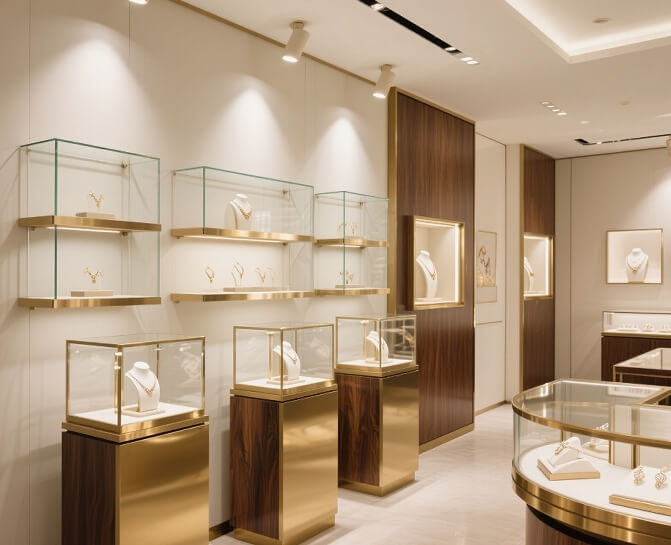
– Glass: Clear glass cabinets offer unobstructed views of jewelry, creating the illusion that pieces “float” in mid-air. For example, a necklace with a delicate pendant might be showcased in a curved glass display, allowing customers to admire its symmetry from all angles.
– Metal: Stainless steel with a gold-plated finish combines durability with opulence. A modern jewelry line featuring sleek silver bracelets might use brushed stainless steel racks with gold accents to create a subtle contrast, while a vintage-inspired collection could pair ornate gold metalwork with velvet backings for a regal touch.
– Solid Wood: Rich mahogany or oak racks add warmth and texture, ideal for stores emphasizing craftsmanship or eco-luxury. A brand specializing in handcrafted wooden jewelry might use reclaimed wood racks with visible grain patterns, creating a narrative of sustainability and heritage.
Design Aesthetics:
– Keep exteriors simple and elegant to avoid overwhelming the jewelry. Geometric shapes—such as asymmetrical hexagons or smooth arcs—can add visual interest without distraction. For example, a circular glass display with a metal frame might showcase a single statement ring, allowing its sparkle to take center stage. Avoid elaborate carvings or busy patterns; instead, let the jewelry’s design speak for itself.
3.Reasonably Plan Spatial Layout: Guiding the Customer Journey
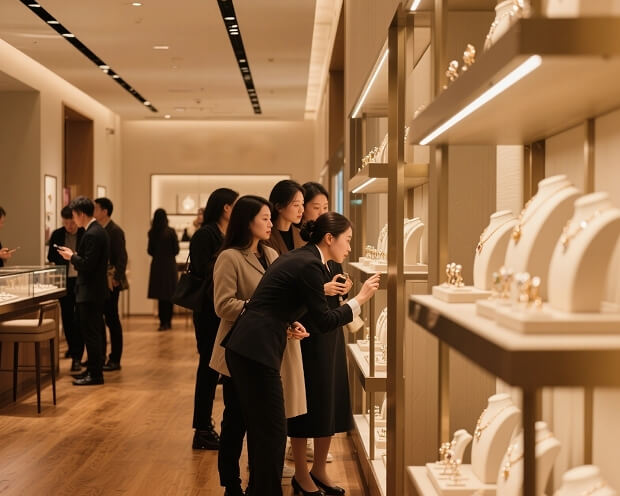
Spatial layout is the backbone of a seamless shopping experience. It should balance functionality with ambiance, ensuring customers feel both inspired and at ease as they explore.
Functional Zoning:
– New Product Area: Place near the entrance or in high-traffic zones to immediately capture attention. For example, a seasonal collection of diamond earrings might be displayed on a rotating glass platform under bright spotlights, drawing customers inward.
– Classic Collection Area: Position in quieter, well-lit corners for contemplative browsing. A brand’s heritage line of platinum wedding bands could be showcased in a wood-paneled alcove with soft, diffused lighting, encouraging customers to linger and appreciate timeless designs.
– VIP Exclusive Area: Tucked away with private access, this space might feature plush seating, a dedicated sales associate, and custom display cases. Imagine a velvet-upholstered room where a client can try on a high-end emerald necklace in privacy, with a personal stylist on hand to offer insights.
Wayfinding and Flow:
– Use themed signage to distinguish zones—e.g., a gold-lined sign with cursive lettering for the “Vintage Collection” or a sleek, backlit panel for “New Arrivals.” Ensure aisles are wide enough for comfortable movement (at least 3 feet for casual browsing, 5 feet for high-traffic areas) to prevent congestion.
For example, a small boutique might use curved pathways to guide customers through different collections, while a larger store could employ open floor plans with strategic “landmarks” (e.g., a central chandelier) to orient shoppers.
4.Skillfully Use Lighting and Colors: Crafting Mood and Magnetism
Lighting and color are the unsung heroes of luxury retail, capable of transforming a space from ordinary to enchanting. Here’s how to wield them strategically:
Lighting Strategies:
– Warm-Toned Ambient Lighting: Soft, golden LED strips along ceilings or baseboards create a cozy, inviting atmosphere. For example, a necklace with warm-hued gemstones (like rubies or topaz) will glow richly under 3000K lighting, enhancing their natural radiance.
– Targeted Spotlighting: Use track lights or adjustable spotlights to highlight key pieces. A diamond engagement ring might be illuminated by a tiny spotlight angled to catch its facets, creating a “starburst” effect that draws the eye. In wall displays, adjustable fixtures allow quick repositioning as collections rotate.
– Display Case Lighting: Miniature spotlights embedded in glass cases ensure jewelry textures and details—like the intricate filigree on a bracelet—are vividly visible. For example, a vintage brooch with intricate enamel work might be lit from below to emphasize its three-dimensional depth.
Color Palettes:
– Primary Tones: Rich gold, deep navy, or emerald green as base colors evoke luxury. A store specializing in yellow gold jewelry might use a warm golden backdrop to complement the merchandise, while a brand focused on cool-toned platinum could opt for a sleek silver-gray palette.
– Accent Colors: Crisp white or soft pastels add contrast and balance. For instance, a gold-themed store might use white marble countertops to create visual breathing room, or a pop of rose pink in display backings to enhance the sparkle of diamond studs.

5.Professional Service Team: The Human Touch of Luxury
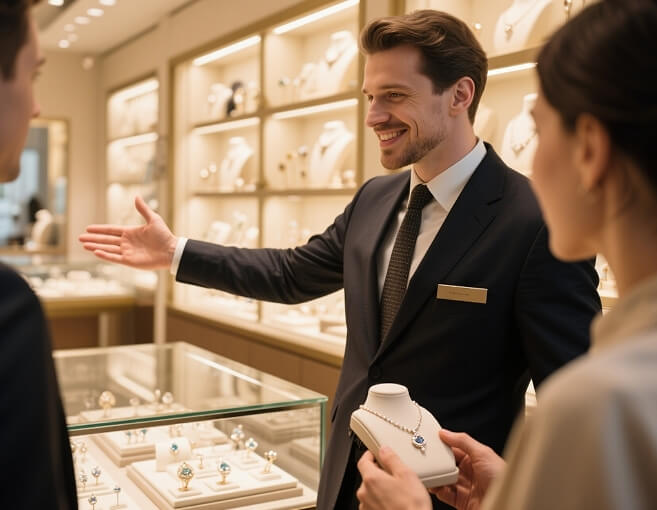
No luxury experience is complete without a team that embodies expertise and elegance. Sales staff are not just sellers—they are storytellers, trusted advisors, and the face of your brand.
Knowledge and Expertise:
– Material Mastery: Associates should explain the provenance and quality of materials with confidence. For example, when showcasing a platinum ring, they might mention its rarity (30 times rarer than gold) and hypoallergenic properties, reassuring customers of its value.
– Craftsmanship Insights: Details matter. A salesperson might describe how a “bezel setting” protects a gemstone while enhancing its clean lines, or how hand-engraving on a pendant adds unique character.
Styling Consultations:
– Teach customers to curate their look by mixing metals, textures, and styles. For example, suggest pairing a delicate silver chain with a bold gold cuff for an edgy contrast, or layering pearl necklaces of varying lengths for a classic ensemble. Use visual aids, like a style guide booklet or a digital app, to illustrate pairing possibilities.
Service Etiquette:
– Warm Greetings: A smile, direct eye contact, and a tailored welcome (“Good afternoon! I notice you’re browsing our diamond collection—would you like to see our new halo-cut designs?”) set a personal tone.
– Patient Guidance: When a customer asks about a gemstone’s durability, respond with both facts (e.g., “Sapphires rate 9 on the Mohs scale, making them ideal for daily wear”) and empathy (“I understand how important it is to choose a piece that lasts a lifetime”).
Building Trust:
– Offer post-purchase care tips (e.g., “To keep your silver from tarnishing, store it in a anti-tarnish pouch”) and follow up with personalized messages (e.g., a handwritten note on the anniversary of a purchase). These gestures transform transactions into relationships, turning first-time buyers into loyal advocates.
Conclusion: From Passing Cloud to Timeless Icon
By reimagining your store through these five dimensions—unique exteriors, intentional displays, thoughtful layouts, strategic lighting/color, and a world-class team—you can transform your jewelry store into a “white moonlight”: a timeless, cherished destination that resonates long after the first visit. In a market defined by choice, it’s the blend of aesthetics, expertise, and emotion that turns casual browsers into lifelong patrons.