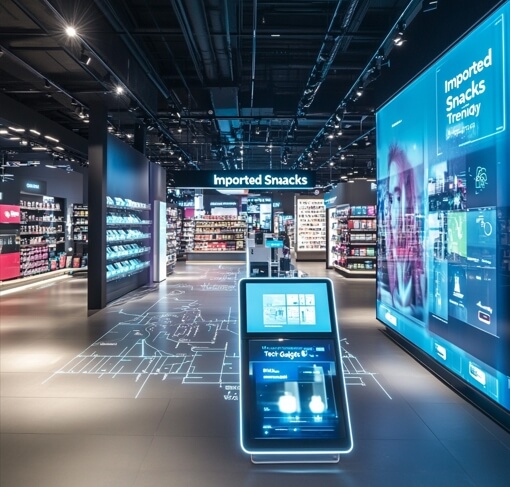
How to make your snack store more appealing to younger consumers?
In the highly competitive snack market, attracting young consumers requires a strategic integration of design and marketing. The following recommendations, examined from multiple perspectives, are designed to assist your snack store in successfully appealing to this demographic.

1.Conveying the brand story and infusing cultural significance into the display shelf.
Today’s youth are increasingly inclined to invest in brands with compelling narratives, valuing not only product functionality and quality but also the underlying brand story and values.
Therefore, when designing display stands, integrating the brand story can transform them from mere product showcases into mediums for conveying brand culture and values.
Firstly, incorporating historical or product-specific elements through creative design can enhance the narrative. For instance, a traditional food brand with a rich history could integrate retro elements such as traditional wooden structures and intricate carvings, allowing consumers to experience the brand’s heritage while purchasing snacks. Conversely, modern brands may opt for minimalist and tech-driven designs to highlight innovation.
Secondly, the shape or decoration of the display stand can narrate the origin stories of the products. A brand specializing in imported snacks could segment the display into regions, each adorned with local motifs—such as Japanese parasols or miniature Eiffel Towers—providing an immersive shopping experience.
Additionally, QR codes can be utilized to showcase the brand’s commitment to sustainability. By placing QR code signs on the display, consumers can access videos or articles detailing the brand’s efforts in environmental protection and social responsibility.
This type of interaction not only fosters emotional resonance among consumers but also strengthens their trust and loyalty toward the brand.

2.Establish social attributes and promote seamless online and offline interactions.
Young consumers today place a high value on social experiences, making it essential for businesses to cater to this preference. Display stands can be transformed into captivating focal points that not only attract attention but also encourage interaction and sharing. By incorporating eye-catching decorations, such as vibrant colors, unique lighting effects, and artistic installations, these displays become visually appealing and memorable. Engaging textual slogans that resonate with the target audience can further enhance the appeal, conveying messages that are both relatable and inspiring.
Interactive gaming devices can be integrated into the display stands, offering visitors an entertaining experience that sets the brand apart from competitors. For instance, a fashion retailer might include a virtual try-on mirror where customers can see themselves in different outfits without physically changing clothes. This innovative approach not only adds fun but also increases the likelihood of purchases.
To fully leverage the power of social media, businesses should encourage consumers to capture and share moments at the display stands. Hashtag campaigns can play a crucial role in this effort, creating a unified platform for users to post their photos and videos. Exclusive rewards, such as discounts or special offers for those who participate in the campaign, can serve as additional incentives. These strategies not only boost consumer engagement but also enhance the store’s online visibility, attracting more potential customers and fostering brand loyalty.
Moreover, businesses can collaborate with influencers or local artists to create unique content around the display stands. This collaboration can generate buzz and excitement, drawing in a wider audience and increasing foot traffic. By focusing on creating memorable and shareable experiences, businesses can effectively tap into the social preferences of young consumers and build a strong online presence.

3.Emphasize multi-sensory experiences to elevate the shopping enjoyment.
The design of display stands should facilitate a multi-sensory experience, which can significantly enhance the overall shopping environment and consumer engagement.
For instance, incorporating scent diffusers can enable consumers to enjoy appealing aromas near specific snack sections. Imagine walking past a section dedicated to gourmet chocolates; the air is subtly infused with the rich, sweet scent of cocoa, immediately evoking feelings of indulgence and nostalgia.
This not only creates a pleasant atmosphere but also encourages customers to spend more time in that area, increasing the likelihood of making a purchase. Additionally, tactile experience zones can showcase the material quality and distinctive packaging of products, thereby enhancing purchasing intent.
Moreover, auditory elements play a crucial role in creating an immersive experience. Soft background music tailored to the store’s ambiance can set the mood, while strategically placed speakers near certain displays can provide informative audio snippets about the products.
The integrated utilization of visual, auditory, olfactory, and tactile elements aims to create a comprehensive sensory engagement that resonates with consumers on multiple levels. Visually striking displays, combined with the other senses, can transform a simple shopping trip into a memorable and enjoyable experience.
4.Emphasize the functional design with a focus on enhancing user convenience.
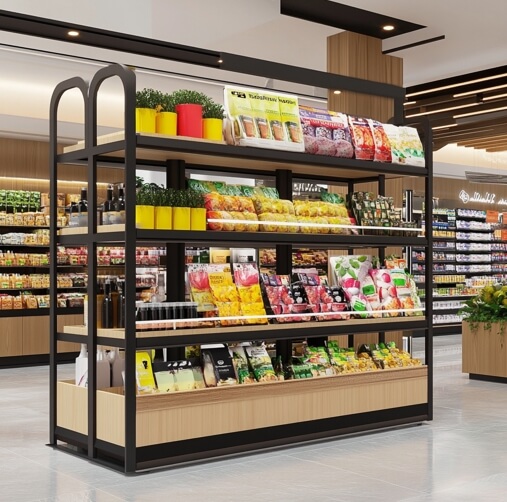
The functional design of the display rack significantly influences the purchasing experience of consumers. A well-conceived display shelf not only enhances shopping convenience but also elevates overall customer satisfaction, thereby promoting sales.
For instance, adjustable-height display stands can be designed for younger consumers with shorter stature. This design facilitates easy browsing and product selection for customers of varying heights, mitigating the inconvenience and frustration caused by unreachable products.
For shorter customers, this humanized adjustment function undoubtedly enhances their shopping experience and conveys the merchants’ care and consideration.
Moreover, incorporating a designated shopping basket area beneath the shelf is an eminently practical design. When selecting products, customers often need to free their hands to compare different items or examine product details. A dedicated space for shopping baskets allows customers to do so effortlessly, streamlining the shopping process. This design is especially beneficial for customers who tend to purchase multiple items at once.
Additionally, employing a sliding rail design is another effective method to enhance the shopping experience. Sliding rails make goods more accessible, particularly in narrow spaces or on high shelves. Customers no longer need to stretch or tiptoe; they can simply pull the slide to easily retrieve the desired items. This design improves shopping efficiency and reduces potential inconveniences during the shopping process, thus enhancing overall customer satisfaction.
5.Leverage data analysis to enhance presentation efficiency.
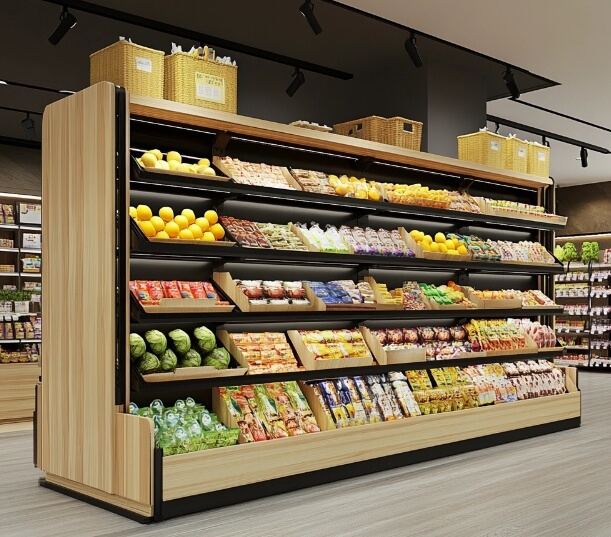
By meticulously analyzing the spatial distribution of high-demand products within the store and consumer behavior patterns, we can gain profound insights into customer movement trajectories and stopping points. For instance, many customers tend to peruse items at the entrance upon entering the store and notice products displayed near the checkout counter during payment. Therefore, it is crucial to strategically optimize the layout and display methods of merchandise.
Specifically, popular items should be positioned in highly visible and accessible locations such as the entrance, along the main aisles, or in promotional zones. High-margin but moderately selling goods can be placed adjacent to associated best-selling products to enhance their visibility and sales potential. Additionally, display strategies can be adapted according to seasonal changes or holiday themes to attract greater customer attention.
Leveraging data analysis tools to conduct an in-depth examination of sales data can significantly enhance the optimization of display stand design. By performing comparative analyses of sales performance across different time periods and locations, we can identify the most effective display configurations.
For instance, certain snacks may exhibit particularly strong sales during afternoon tea hours, suggesting that these products should be prominently featured during this period. Additionally, if sales data indicates that a specific product category performs notably better in a particular area compared to others, it would be prudent to consider expanding the display space for that category.
Considering the unique preferences of younger consumers who value individuality and novelty, establishing specialized sections becomes especially important.
Today’s youth are more inclined to seek out new and interesting snack options. Therefore, creating dedicated areas such as “Internet celebrity snacks” or “imported foods” not only caters to their preferences but also serves as a new attraction point for customers.
Regularly updating the product offerings in these sections, organizing tasting events, and even inviting online influencers for live recommendations can further boost the popularity and influence of these areas.