
Tips to design an attractive optical store
An attractive eyewear store should not only be functional but also leave a lasting visual impression on customers. Here are six key points for designing an eyewear store:
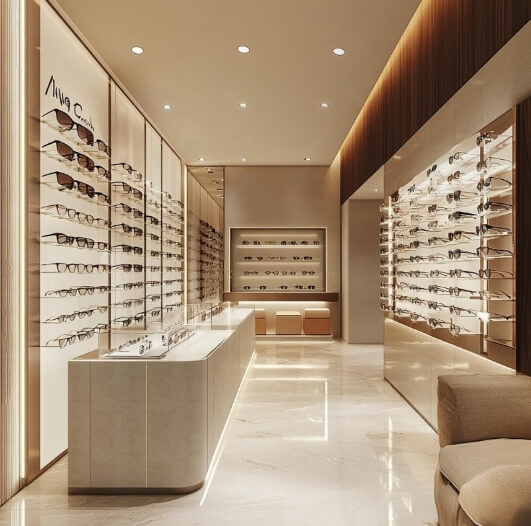
1.Overall Style and Atmosphere.
The overall style of the store should align with the target customer group to ensure that shoppers feel welcomed and comfortable. When selecting a design theme, consider three popular styles: modern minimalist, high-end luxury, or retro-chic. Each style caters to different preferences and can significantly influence the shopping experience.
For a modern minimalist approach, focus on clean lines, neutral colors, and uncluttered spaces. This style appeals to customers who value simplicity and functionality. Use materials like glass, metal, and concrete to create an open and airy environment. Incorporate plenty of natural light to enhance the sense of spaciousness and brightness. Minimalist stores often feature fewer but carefully selected products, allowing each item to stand out.
If targeting affluent consumers, a high-end luxury style may be more appropriate. This design emphasizes quality, exclusivity, and sophistication. Rich textures, premium materials such as marble, velvet, and gold accents can be used to convey opulence. Soft, ambient lighting creates an intimate and elegant atmosphere. Consider adding personalized services and private shopping areas to further enhance the luxurious experience.
For those who appreciate vintage aesthetics, a retro-chic style can evoke nostalgia and charm. Mix and match elements from different eras to create a unique and eclectic space. Warm wood tones, classic patterns, and antique furniture pieces can transport customers back in time. Retro-style lighting fixtures, such as chandeliers or pendant lamps, add character and warmth to the store.

2.Display Fixture Design.
Display fixture play an essential role in eyewear stores, significantly influencing the shopping experience. They must strike a balance between functionality, aesthetics, and quality to create an inviting and efficient environment for customers.
1)Wall Display Units.
Wall display units are strategically positioned to highlight flagship products or seasonal items, drawing attention to key offerings. The design should emphasize simplicity and elegance, with clean lines that do not distract from the merchandise. Incorporating lighting elements, such as LED strips under each shelf, can enhance the visual appeal of the glasses by accentuating their texture and details.
Premium materials like solid wood or aluminum alloy, paired with glass panels, ensure durability while maintaining a high-end appearance. These materials also contribute to a modern and sophisticated ambiance, which can elevate the overall shopping experience. Additionally, wall displays units can be customized with branding elements, such as logos or color schemes, to reinforce brand identity.

2)Free-standing gondola.
Free-standing gondola serve as the central focal point of the store, often acting as the first impression for customers entering the space. To maximize their impact, these gondolas should feature unique designs that encourage interaction and exploration. Multi-tiered rotating gondolas or modular combinations allow customers to view glasses from multiple angles, enhancing engagement.
The use of durable tempered glass and metal frame structures ensures longevity, while mirrored finishes or marble bases add a touch of luxury. These elements work together to create a visually striking and functional centerpiece that draws customers into the store. Moreover, free-standing gondola can be used to showcase limited-edition or exclusive items, further enhancing their appeal.
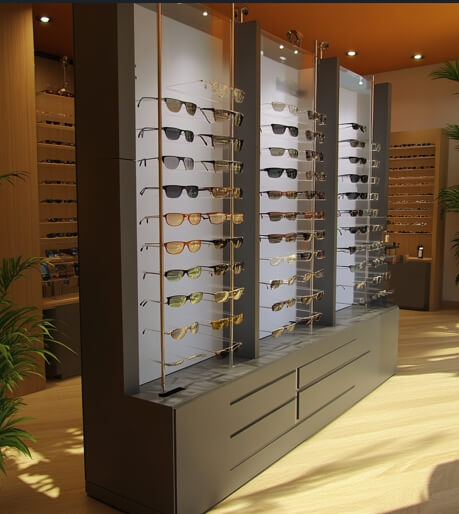
3) Window Display.
The window display plays a crucial role in capturing the attention of passersby and inviting them into the store. It serves as the first point of contact between potential customers and the brand, making it essential to create an engaging and memorable experience.
The racks within the display should not only showcase products but also reflect the creativity and unique identity of the brand. By carefully selecting elements that align with the brand’s message, the window display becomes a powerful tool for communication and customer engagement.

3.Functional Zoning and Layout.
A well-thought-out layout not only enhances the overall shopping experience but also maximizes space utilization and customer satisfaction. To achieve this, it is essential to divide the store into distinct functional zones, each serving a specific purpose. Firstly, consider the try-on areas, which are vital for customers to comfortably test eyewear. These areas should be spacious and equipped with full-length mirrors, adequate lighting, and seating options for companions or family members. Providing a pleasant environment where customers can take their time trying on different frames will encourage them to explore more options and ultimately make better-informed decisions.
Secondly, the sales areas need to be strategically organized. Display cases should be arranged in a way that showcases a wide variety of eyewear styles and brands. Incorporating interactive elements such as digital displays or touchscreens can enhance the shopping experience by providing additional information about products, including features, materials, and care instructions.
Additionally, having knowledgeable staff readily available to assist customers can significantly improve the service quality. Rest areas are another important component of the store design. These spaces offer customers a place to relax and reflect on their choices. Comfortable seating, perhaps with soft lighting and calming decor, can create a welcoming atmosphere. Rest areas can also serve as social spaces where customers can discuss their preferences with friends or family members, fostering a positive shopping environment.

4.High-Quality Material Selection.
High-Quality Material Selection is crucial for designing an attractive optical store. The choice of materials for display racks plays a particularly significant role in creating an inviting and professional environment. High-quality materials not only enhance the product presentation but also reflect the store’s professionalism and brand value, contributing to a positive customer experience.
For instance, wooden racks provide a natural and warm feel that can create a welcoming atmosphere for customers. This material choice is especially suitable for stores aiming to convey a sense of tradition and reliability. On the other hand, the combination of metal and glass highlights modernity and elegance, appealing to customers who prefer contemporary designs. Glass shelves allow products to be displayed clearly, giving them a premium appearance, while metal frames add a touch of industrial chic.
Moreover, using high-quality materials ensures durability and longevity, reducing maintenance costs in the long run. Materials like stainless steel or tempered glass are resistant to scratches and damage, maintaining their pristine condition over time. This not only benefits the store aesthetically but also economically.
Additionally, the selection of materials should align with the overall theme and target audience of the store. For example, a luxury optical store might opt for marble countertops and polished brass fixtures to exude opulence, while a more casual and trendier store could choose sleek acrylic displays and vibrant colors. By carefully considering these factors, the store can create a cohesive and appealing environment that resonates with its intended customer base.
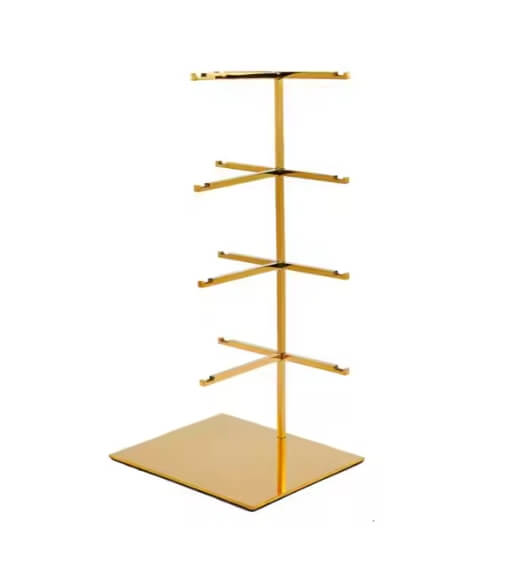
5.Branding and Signage Design.
A well-executed branding strategy can significantly enhance the overall shopping experience for customers, making it essential to integrate these elements seamlessly into the store design. Firstly, consider how renderings can bring your brand vision to life. For instance, incorporating illuminated logos on walls or display racks not only adds a modern and sophisticated touch but also ensures that your brand is prominently featured throughout the store. These illuminated elements can serve as focal points, drawing customers’ attention and reinforcing brand identity.
Moreover, maintaining a consistent primary color scheme throughout the store design is vital for strengthening brand recognition. Choose colors that align with your brand’s personality and values. For example, if your brand aims to convey trust and professionalism, opt for shades of blue or green, which are often associated with reliability and health. Consistency in color usage across all visual elements, from wall paint to product displays, helps create a cohesive and memorable environment for shoppers.
Additionally, consider extending your branding efforts beyond just visual elements. Incorporate branded messaging and slogans in strategic locations within the store, such as near the entrance or at checkout counters. This reinforces your brand’s key messages and creates multiple touchpoints for customer engagement.
Furthermore, signage should be designed with both aesthetics and functionality in mind. Ensure that signs are easy to read and provide clear directions for customers. Well-placed signage can guide customers through the store, helping them find what they need more efficiently. For example, use directional signs to lead customers to different sections of the store, such as prescription glasses, sunglasses, or accessories.
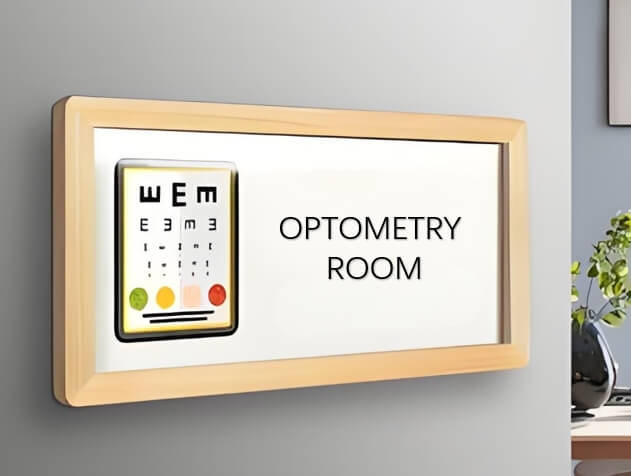
6.Digital and Interactive Experiences.
Digital and Interactive Experiences play a crucial role in designing an attractive optical store. In today’s technologically advanced world, providing customers with a digital shopping experience can significantly enhance their overall satisfaction and engagement. One effective way to achieve this is by integrating touchscreens into display racks. These interactive screens can showcase detailed product information, including specifications, materials, and even customer reviews. This not only adds a sense of technology but also allows customers to make more informed decisions.
In addition to touchscreens, other digital elements such as personalized recommendations based on customer preferences and previous purchases can further enhance the shopping experience. For instance, an AI-powered system can suggest frames that match the customer’s face shape or style preferences, making the selection process more enjoyable and efficient.

By focusing on these key points, especially meticulously designed renderings and store display fixtures, an eyewear store can significantly enhance its visual appeal and functionality.